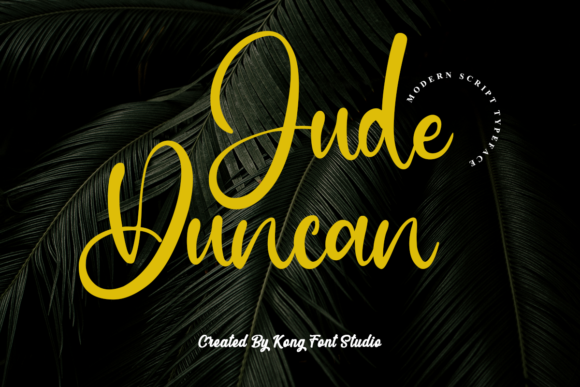
Jude Duncan: A Handwritten Font for Modern Creatives
Finding the right font for a project can feel like a search for a specific voice. You need something that speaks clearly, carries the right personality, and fits the context without causing a fight. Jude Duncan, a modern and playful handwritten font from Kong Font Studio, enters this space as a versatile creative font. It’s not trying to be a formal script or a rigid serif; it’s a display font with a friendly, approachable tone that designers and crafters reach for when a project needs a human touch.
At its core, Jude Duncan is characterized by its smooth, flowing letterforms. The strokes have a consistent, pleasant weight, avoiding the overly scratchy or erratic look some script font styles can have. Its playfulness comes from subtle, natural connections between letters and a casual baseline that feels handwritten but not messy. This balance is key. It’s legible enough for short bursts of text, like a headline or a logo, yet carries enough personality to inject warmth into a design. Think of it as the typographic equivalent of a friendly smile in a business card—it’s professional, but it’s also inviting.
Where Does Jude Duncan Fit Best?
The real test of any premium font is its practical application. Jude Duncan shines in projects where brand identity leans toward the personal, the artisanal, or the creatively direct. For logo design, especially for small businesses, boutiques, bakeries, or creative studios, it can establish a welcoming and hands-on aesthetic. It’s a strong candidate for packaging design on products where the maker’s personality is a selling point—think gourmet jams, handmade soaps, or boutique stationery.
In the digital realm, this modern typography choice works well for social media graphics, blog headers, and website accents. A food blogger might use it for recipe titles; a lifestyle coach could use it for inspirational quote graphics. Its clarity at typical screen sizes makes it a practical tool for content creators and marketers looking to add a personal flair to their visual content. For publishing, it’s less suited for body copy in a novel but could be perfect for chapter titles in a cookbook or headings in a lifestyle magazine’s editorial layout.
Crafters and hobbyists find immediate value in its compatibility. Being fully functional in design software like Adobe Photoshop and Silhouette Design Studio means it integrates seamlessly into workflows for creating custom T-shirts, decals, greeting cards, and home decor. This practicality extends to small business owners designing their own marketing materials, from flyers to email headers.
Using Jude Duncan with Intention: Beyond the Download
Simply liking a font’s appearance isn’t enough; you need to evaluate if it’s the right tool for the job. When considering Jude Duncan for a project, start by assessing the overall tone you need to set. Its playful, handwritten style communicates approachability, creativity, and informality. It’s an excellent choice for a brand targeting a female demographic, a creative community, or a market that values authenticity over corporate polish. However, it might not be the ideal fit for a law firm’s website or a financial institution’s annual report.
One of the most critical aspects of using any display font effectively is managing visual hierarchy. Jude Duncan is a star player for headlines, subheadings, and call-to-action buttons. Its role is to attract the eye and convey personality. Pairing it with a clean, neutral sans serif font or a traditional serif font for body text is a classic and effective strategy. This contrast ensures readability for longer passages while allowing the handwritten style to serve as a decorative accent. For example, pairing Jude Duncan with a font like Montserrat or Open Sans creates a balanced, modern look where each typeface has a distinct, complementary purpose.
Before committing, always test the font in context. Download the file and mock up a few key elements of your project—perhaps a product label, a social media post, and a business card. Check the spacing between specific letter pairs (kerning) and the overall flow of words. Does it remain legible at the size you’ll use it most? Review the included character set; does it have the symbols, numbers, and punctuation you need? For commercial projects, verifying the commercial font license from the source, like the one offered on Creative Fabrica by Kong Font Studio, is a non-negotiable step to ensure you’re using the design assets legally.
Ultimately, Jude Duncan is a valuable addition to a designer’s toolkit when used thoughtfully. It’s not a universal solution, but in the right context—a playful brand, a personal project, a creative marketing campaign—it can elevate the design from merely functional to genuinely engaging. Its strength lies in its ability to add a layer of human connection, making your message feel less like an advertisement and more like a conversation.