Chucky Buck: A Playful Handwritten Font for Modern Creatives
There's a specific kind of energy a project needs when it's meant to feel approachable, fun, and genuinely human. You've felt it when a brand's voice sounds like a friend talking, or when a product label feels like it was made by a real person, not a corporation. Capturing that energy often comes down to the details, and one of the most powerful details is typography. This is where a typeface like Chucky Buck enters the conversation. It’s not just another script font; it’s a tool designed to inject personality and a sense of playful confidence directly into your work.
More Than Just a Handwritten Font
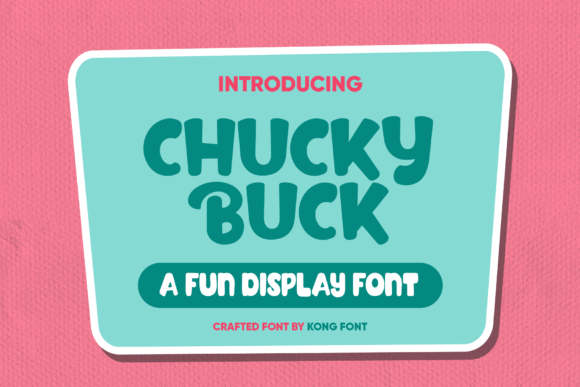
At first glance, Chucky Buck is a modern handwritten font. But that simple description doesn’t quite capture its character. Think of it less like a casual, rushed note and more like the confident, slightly quirky handwriting of someone with a great sense of style. The letterforms have a consistent, bouncy baseline that gives text a lively rhythm without becoming chaotic. The strokes have a natural, hand-drawn quality, avoiding the sterile perfection of some digital fonts. This isn't a delicate, spidery script; it has a certain boldness and presence, making it a surprisingly versatile display font for headlines and short bursts of text where you want to make an immediate impression.
The real appeal of Chucky Buck lies in its ability to be both friendly and professional. It doesn't sacrifice legibility for the sake of style. The characters are well-defined, with enough space between them to remain clear even at smaller sizes. This balance is crucial. You can use it for a logo that needs to feel welcoming, for social media graphics that need to stop a scroll, or for packaging that needs to stand out on a crowded shelf. It’s a creative font that understands the practical demands of real-world design.
Where Does This Typeface Shine? Practical Applications
Understanding a font's personality is one thing; knowing where to apply it is where the real value lies. Chucky Buck isn't a universal solution for every project—no font is—but in the right context, it’s incredibly effective.
Branding and Logo Design
For brands targeting a younger demographic or those in the lifestyle, food, beauty, or artisanal product space, Chucky Buck can be a cornerstone of a brand identity. Imagine it on a coffee shop's logo, a boutique clothing label, or the branding for a local bakery. It communicates craftsmanship and a personal touch. It works exceptionally well when paired with a clean, simple sans serif font for body text, allowing the personality of the headline to shine without overwhelming the viewer.
Digital and Social Media
In the fast-paced world of digital content, grabbing attention is paramount. Use Chucky Buck for YouTube thumbnails, Instagram story quotes, or Pinterest graphics. Its handwritten style feels native to these platforms, creating an immediate, informal connection with the audience. It’s perfect for call-to-action buttons on a website or for highlighting key phrases in a blog post, adding visual interest and guiding the reader's eye. As a premium font, its professional quality ensures your graphics look polished, not amateurish.
Packaging and Print Design
The tactile nature of Chucky Buck translates beautifully to print. On packaging design, it can make a product feel more personal and handmade. Think of labels for artisanal jams, hand-poured candles, or craft beer. It suggests care and attention to detail. In editorial design, such as in magazines or book covers for specific genres like young adult fiction or cookbooks, it can add a layer of warmth and approachability that a standard serif font might not achieve.
Integrating Chucky Buck Into Your Design Toolkit
Choosing a font is a decision that impacts readability, hierarchy, and overall perception. Here’s how to approach integrating a font like Chucky Buck into your workflow effectively.
- Evaluate the Project Fit: Before you even install it, ask: Does this project call for a human, playful, and modern tone? If you're designing a legal firm's website, it's likely not the right choice. If you're creating a social media campaign for a new snack brand, it could be perfect. Always let the project's goals and audience guide your typographic choices.
- Master the Font Pairing: This is where strategy comes in. Chucky Buck is a strong personality, so it needs a partner that complements rather than competes. A classic pairing is with a geometric sans serif font like Montserrat or Lato for body copy. The simplicity of the sans serif provides a clean, readable foundation that allows the character of the handwritten font to take center stage in headlines and logos. Avoid pairing it with another expressive script font or an overly ornate serif.
- Check the Font Files: A good commercial font often comes with more than just the basic alphabet. Look for what's included. Does Chucky Buck have a full set of punctuation, numerals, and multilingual characters? Are there alternate characters or ligatures? These extras can provide valuable flexibility for fine-tuning your typography and ensuring consistency across all your design assets.
- Test for Readability: Always test your text in context. View it at the intended size on a screen and, if possible, in a print proof. Check the kerning (space between specific letter pairs) and leading (line spacing). While Chucky Buck is designed for clarity, a quick check ensures your message is communicated effortlessly. Use it for short to medium-length text blocks; for long-form reading, stick to a more traditional body font.
- Understand the License: This is non-negotiable for professional work. Ensure you have the correct license for your use case—whether it's for a single client project, for your own business's commercial products, or for unlimited use across multiple platforms. Reputable premium font providers make licensing terms clear, protecting both you and the font's creator.
Ultimately, Chucky Buck is more than just a collection of letterforms. It's a design asset with a distinct point of view. Used thoughtfully, it can elevate a project from generic to memorable, helping you build a stronger connection with your audience through the simple, powerful choice of a typeface. It’s a reminder that in modern typography